
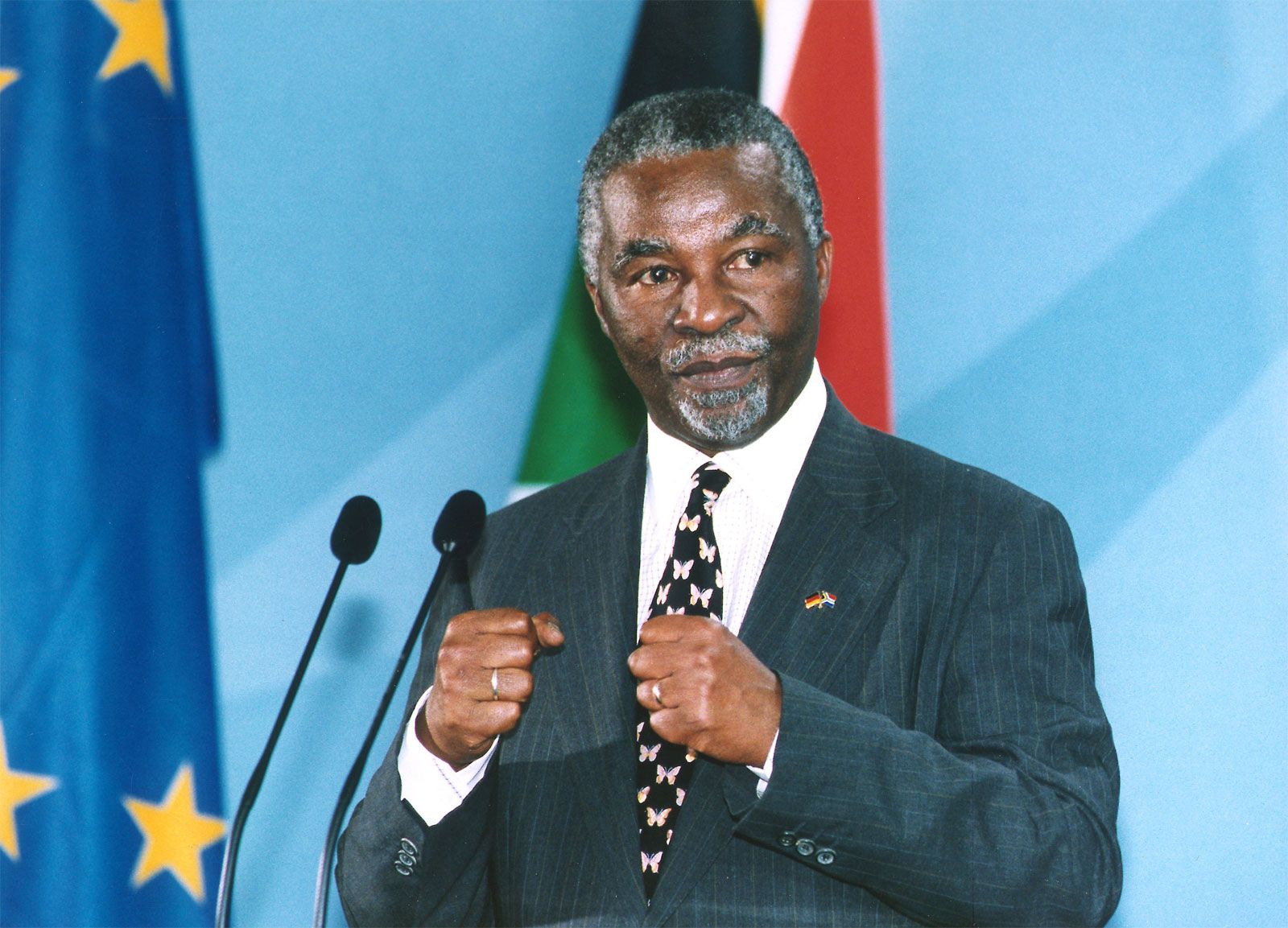
Thabo Mbeki Defends African Migrants
June 1,2026
Former South African President Thabo Mbeki has strongly criticized growing anti-immigrant sentiments in South Africa, arguing that foreign nationals are being unfairly blamed for the country’s economic and social challenges while the real causes remain unaddressed.
Speaking at the Thabo Mbeki Foundation and AUDA-NEPAD Business Breakfast, the former president urged South Africans to reject narratives that portray African migrants as the source of unemployment and crime, describing such claims as misleading and counterproductive.
Mbeki's remarks come amid heightened tensions surrounding immigration in South Africa and follow the recent voluntary return of nearly 300 Ghanaians who left the country over fears sparked by anti-foreigner demonstrations and security concerns.
Addressing participants at the event, Mbeki acknowledged that South Africa faces serious challenges, including high unemployment and crime rates. However, he insisted that undocumented African migrants are not responsible for these problems.
According to him, South Africa’s economic difficulties stem from deeper structural and historical issues that have developed over many years rather than the presence of foreign nationals.
"The finger is being pointed at the wrong people," Mbeki stressed, noting that those responsible for the country's economic decline have largely escaped public scrutiny while migrants have become convenient scapegoats.
The former president argued that South Africa’s economic trajectory began changing long before immigration became a major political issue. He maintained that blaming migrants diverts attention from critical policy and governance failures that require urgent attention.
Mbeki further predicted that migration into South Africa would continue regardless of political rhetoric or anti-immigrant campaigns, urging policymakers to focus on managing migration effectively instead of fueling hostility toward foreigners.
He warned that targeting migrants would do little to address unemployment or improve economic conditions, emphasizing that lasting solutions lie in confronting the actual drivers of economic hardship.
In one of the strongest moments of his address, Mbeki accused some anti-immigrant activists of focusing on the wrong targets.
"You are busy chasing ghosts while leaving the real devil untouched," he said, calling on South Africans to confront reality rather than embrace what he described as false narratives.
The former president also highlighted the historic relationship between South Africa and the rest of the African continent, reminding citizens that many African countries supported South Africa during its struggle against apartheid.
He urged South Africans to strengthen continental solidarity and recognize the shared history and common aspirations that bind African nations together.
Mbeki concluded by calling for honest national conversations on unemployment, economic growth, and social development, stressing that meaningful progress can only be achieved when the country addresses the root causes of its challenges rather than blaming vulnerable migrant communities.
